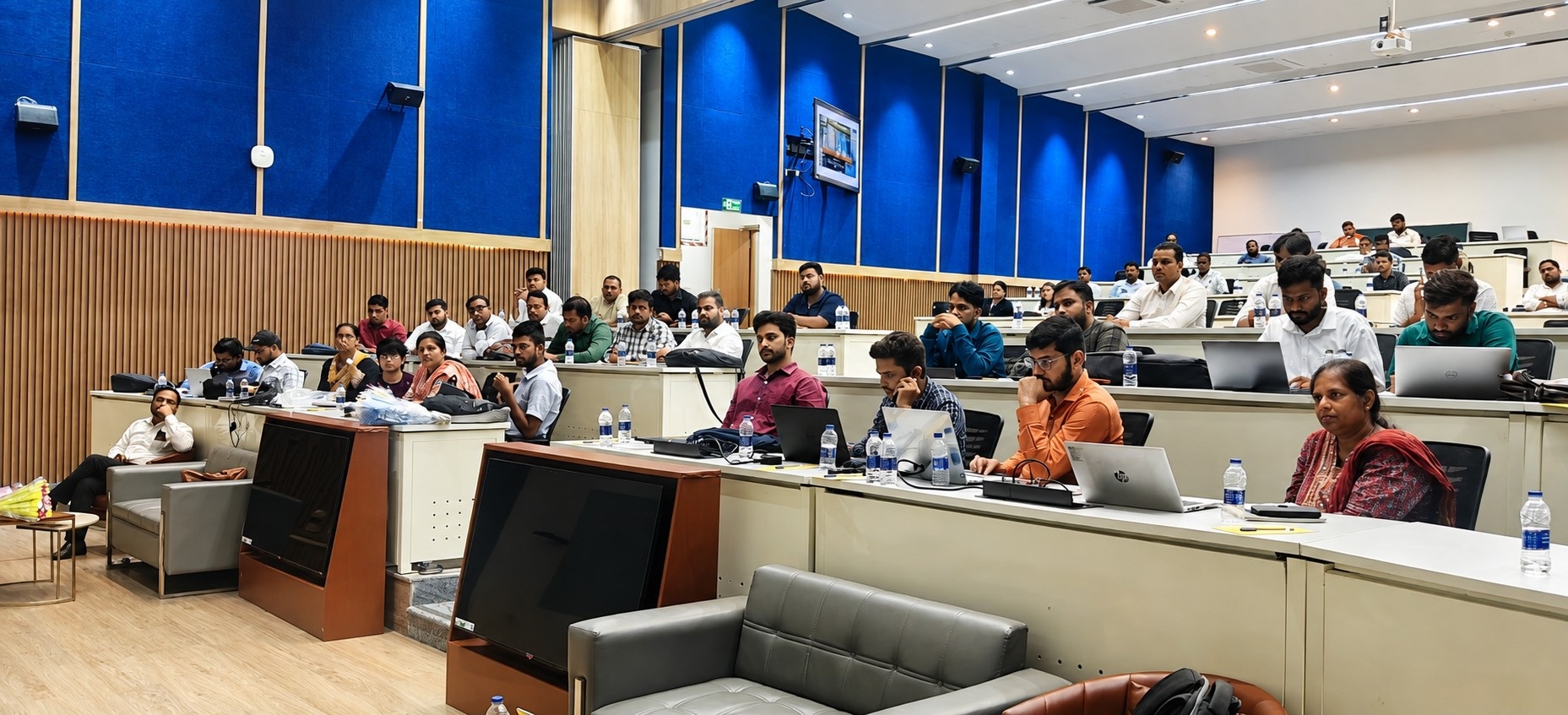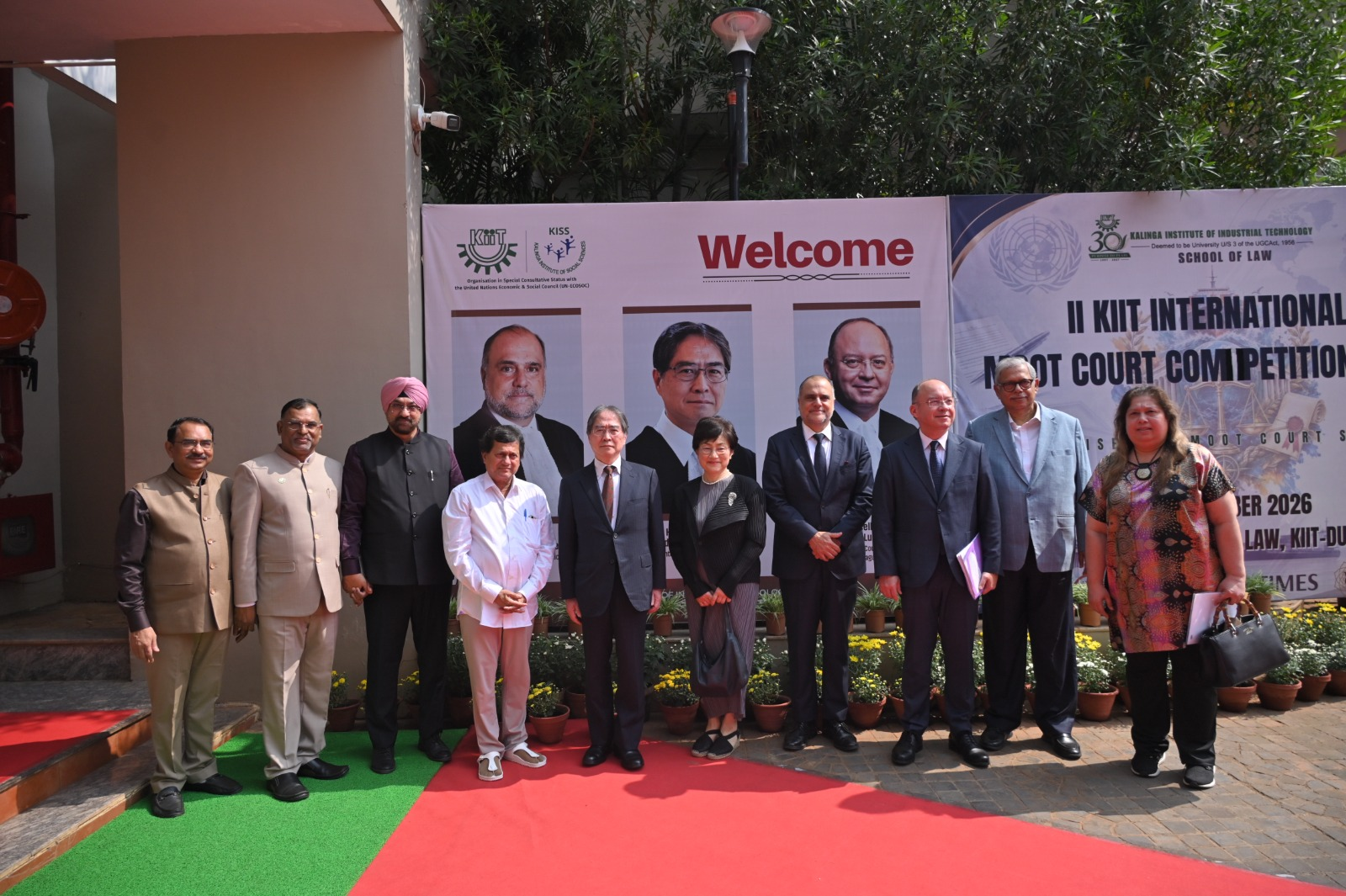
Bhubaneswar, November 14: The School of Law, Kalinga Institute of Industrial Technology (KIIT) Deemed to be University, organised an International Law Conference on ‘Contribution of the International Court of Justice (ICJ) to World Peace’ on Saturday.
The conference was attended by ICJ President Judge Yuji Iwasawa and Judge Leonardo Nemer Caldeira Brant and Judge Bogdan-Lucian Aurescu. Others present included KIIT, KISS & KIMS Founder Prof. Achyuta Samanta; Chancellor Ashok Kumar Parija; Vice-Chancellor Prof. (Dr.) Saranjit Singh; Professor Emeritus Prof. (Dr.) N. L. Mitra; Pro-Vice-Chancellor Prof. (Dr.) Raju K. D and other dignitaries.
Speaking on the theme Judge Iwasawa said, the principle at the core of the International Court of Justice’s contribution to world peace is the peaceful settlement of disputes between states through international law rather than force. Established under the UN Charter, the ICJ provides an independent and impartial forum to resolve legal disputes through binding judgments and clarify international law through advisory opinions. By upholding justice, encouraging dialogue and strengthening respect for international legal obligations, the Court promotes peaceful relations among nations. Ultimately, the Court determines the law, while states bear the responsibility for respecting and implementing its decisions, he added.
Speaking upon the theme, Judge Brant put light on Emerging Frontiers of International Law, Human Rights, Elemental Protection, and Global Responsibility. The evolving role of international law reflects a shift from merely ensuring peaceful coexistence among states to promoting multilateral cooperation, human rights, environmental protection and global responsibility. The International Court of Justice is increasingly emerging as a vital institution in this transformation, serving as a line of defence for the international legal order. Through its jurisprudence, the Court addresses complex and sensitive global challenges, upholds shared community interests and reinforces the rule of law.
Judge Aurescu highlighted the challenges posed by rising sea levels. He said India, with its coastline, is particularly vulnerable to rising sea levels, threatening coastal cities, island territories, livelihoods and millions of people. Mumbai, Kolkata, Chennai and Visakhapatnam face increasing risks of coastal flooding, erosion and displacement, while Lakshadweep and the Andaman and Nicobar Islands face serious environmental challenges. The International Law Commission and the International Court of Justice have emphasised the need to protect maritime boundaries, preserve statehood and safeguard the human rights of affected populations. For India, international cooperation, climate justice and legal protection are essential to addressing this growing existential threat.
Prof. Saranjit Singh, Vice-Chancellor, KIIT-DU gave the welcome address, followed by a keynote address by Prof. N. L. Mitra. Ashok Kumar Parija introduced the interactive session, which included questions to the judges and an interaction with students chaired by Chancellor Parija and Prof. Rohini Sen. Prof. (Dr.) Raju K. D., Pro-Vice-Chancellor, KIIT, delivered the vote of thanks.
The prize distribution ceremony of the 2nd KIIT International Moot Court Competition 2026 was organised on the occasion. The competition carried total cash prizes of Rs 3,90,000. Symbiosis International (Deemed to be University), Pune, emerged as the winner with Rs 2,00,000 cash prize, while Maharashtra National Law University, Chhatrapati Sambhajinagar, secured the runner-up position with Rs 1,00,000. Niral Raghav of Chanakya National Law University, Patna, received the Best Researcher award, Vrinda Tanwar of Guru Gobind Singh Indraprastha University, Delhi, won Best Speaker, and the team from Symbiosis received Best Memorial. Each award carried Rs 30,000.